
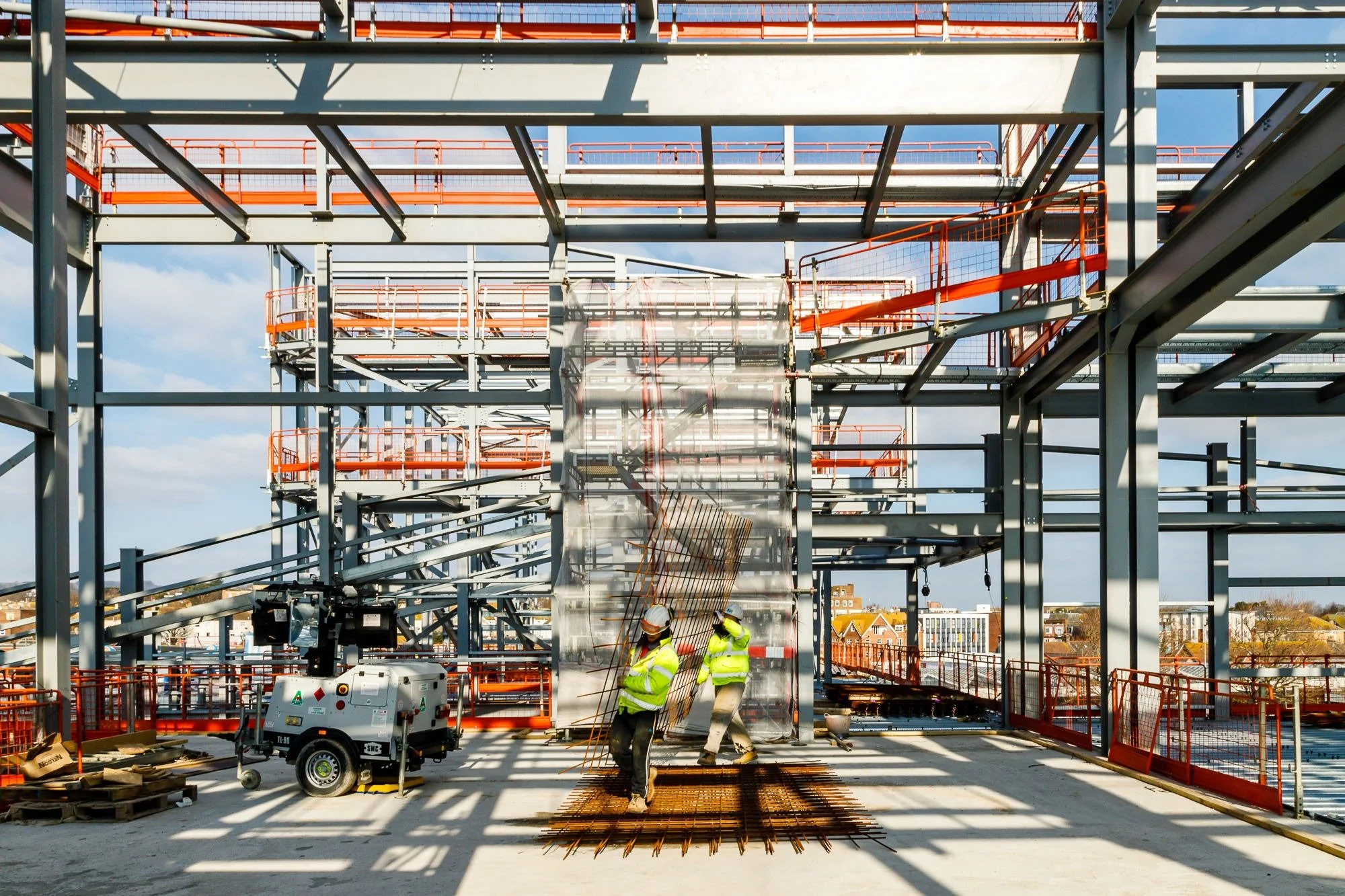
Infrastructure is rarely the most visible part of a development project, but it is often the most decisive. Water, sewer, power, stormwater, roads, and access systems determine whether a site can support new uses, how much density is possible, and how expensive it will be to build.
Because infrastructure is largely unseen, it is also frequently underestimated. Projects move forward with conceptual plans only to discover later that the site cannot support what was envisioned - or that major upgrades are required to make it work. When these discoveries happen late, they can derail feasibility entirely.
Infrastructure Sets the Limits of What Is Possible
Before any project can be evaluated honestly, the basic question must be answered: Can the site actually support the proposed use? That answer depends less on zoning text or design ideas and more on infrastructure capacity.
Key considerations typically include:
water pressure and fire flow
sewer line size and downstream capacity
electrical service and load
gas availability
stormwater management requirements
roadway access and traffic impacts
These factors directly influence building size, unit count, construction cost, and timeline. Ignoring them early creates risk that compounds as the project advances.
Why Infrastructure Issues Are So Disruptive When Found Late
Infrastructure problems are not unusual. What makes them damaging is timing. A sewer upgrade or electrical service expansion may be manageable if identified early, but devastating if discovered after design, financing assumptions, or partnerships are already in place.
For example, learning late that a site requires a significant utility upgrade can:
add unexpected capital costs
delay permitting by months
require redesign or density reductions
undermine financing assumptions
weaken confidence among partners
These disruptions are rarely fatal on their own. They become fatal when there is no room left to adjust.
The Role of Will-Serve Letters and Early Utility Coordination
One of the most effective ways to reduce infrastructure uncertainty is early coordination with utility providers. Will-serve letters or capacity confirmations help establish whether existing systems can support the proposed development.
These confirmations do not guarantee final approval, but they provide critical guidance early enough to inform planning decisions. Projects that pursue utility coordination early tend to move through later stages with fewer surprises and less friction.
Infrastructure Is Closely Tied to Public Process
Infrastructure decisions are often linked to permitting, capital improvement plans, and public approvals. Projects that rely on off-site improvements or system upgrades may need coordination across multiple departments or agencies.
Early understanding of these processes helps project sponsors:
anticipate timelines realistically
identify dependencies between approvals
understand where public investment may be required
avoid assumptions that conflict with policy or capacity
This clarity is especially important for projects with public benefit or community-serving goals.
Why Infrastructure and Feasibility Must Be Evaluated Together
Infrastructure is not just an engineering issue - it is a financial one. Capacity constraints affect development cost, which in turn affects feasibility. A project that appears viable on paper may become infeasible once infrastructure costs are fully understood.
Evaluating infrastructure alongside market demand, affordability targets, and funding strategy allows project sponsors to see the full picture early. This integrated approach prevents late-stage trade-offs that weaken outcomes.
Infrastructure Often Shapes Phasing and Scale
In some cases, infrastructure constraints do not eliminate a project but change how it must be delivered. Phasing, density, and use mix may need to adjust to align with available capacity.
Projects that identify these constraints early can design around them thoughtfully. Projects that identify them late are forced to react under pressure.
How River & Main Approaches Infrastructure in Early Planning
River & Main incorporates infrastructure evaluation into early-stage planning, not as a technical afterthought but as a foundational input. Our work helps projects understand what the site can realistically support before commitments are made.
We focus on:
identifying key infrastructure questions early
coordinating with utilities and public agencies
flagging capacity risks before design advances
integrating infrastructure realities into feasibility analysis
helping partners understand cost and timing implications
By bringing infrastructure into the conversation early, projects gain flexibility instead of losing it.
Why Infrastructure Is a Turning Point
Infrastructure is often the moment when ideas meet reality. It defines the boundaries within which a project must operate. When those boundaries are understood early, they guide better decisions and stronger outcomes.
Ignoring infrastructure does not make it go away. Understanding it early turns a hidden risk into a manageable one.
That understanding is one of the most important foundations a project can have - long before the first dollar is spent.
-
U.S. Environmental Protection Agency (EPA). Smart Growth | US EPA. Accessed February 2, 2026.
Urban Land Institute (ULI). Curtis Infrastructure Initiative | ULI Americas. Accessed February 2, 2026.
HUD User. Environmental Review - HUD Exchange. Accessed February 2, 2026.
